Imagine navigating the world’s largest ocean without a compass, sextant, or GPS. Just the stars, the swell of the waves, and the flight path of seabirds guiding you across thousands of miles of open water. This isn’t a story from a thousand years ago. It is happening right now. The legendary traditional Polynesian voyaging canoe, Hōkūleʻa, is currently undertaking a monumental 43,000-nautical-mile journey. But nature has a way of rewriting our itineraries. Whether you are a cultural immersion seeker or a sustainable traveler wanting to witness history, aligning your own Pacific journey with the Moananuiākea voyage requires flexibility, deep respect for the ocean, and a bit of insider knowledge.
Understanding the Polynesian Voyaging Society Schedule
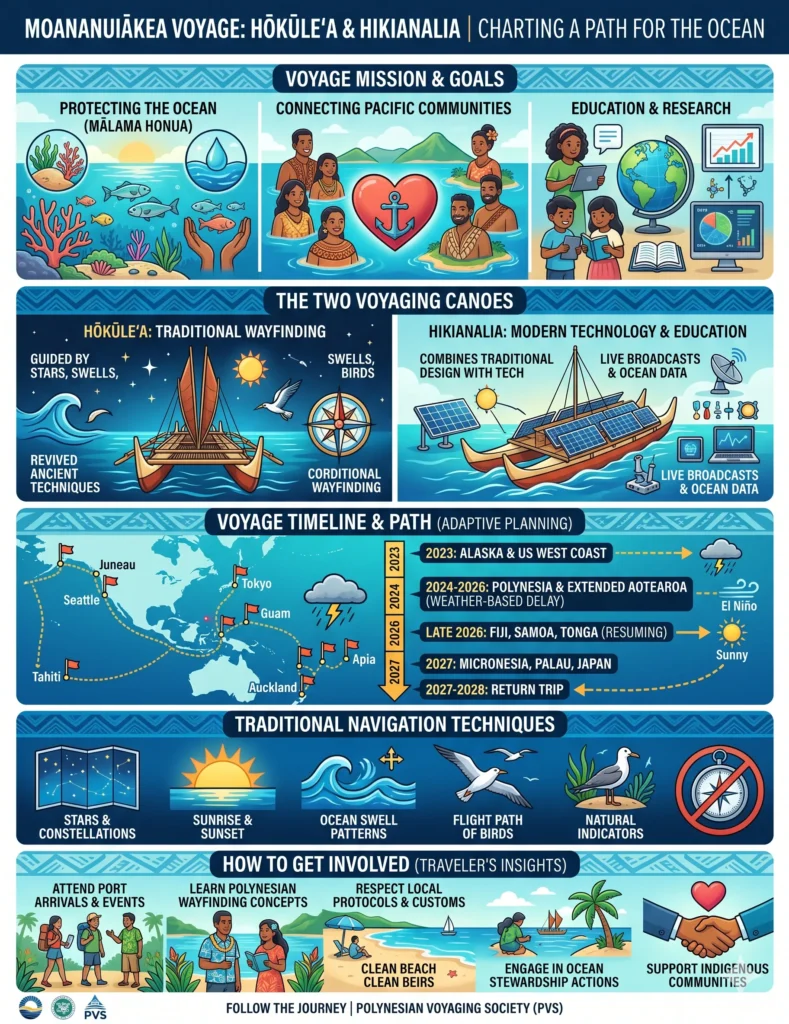
The Polynesian Voyaging Society (PVS) schedule dictates the global circumnavigation of the Hōkūleʻa. Originally set to sail continuously from 2023 to 2027, the timeline is highly fluid, prioritizing safety and adapting to shifting weather patterns, seasonal changes, and ocean health.
To truly understand this journey, you have to throw away the rigid itineraries most travelers are used to. The Polynesian Voyaging Society adjusted the sail plans for the Hōkūleʻa and Hikianalia for the next leg of the Moananuiākea voyage due to changing weather and potential El Niño conditions in the South Pacific. This wasn’t a failure of planning; it was a masterclass in traditional wayfinding. True navigators listen to the earth.
Instead of forcing their way through dangerous hurricane seasons, the crew opted for an extended stay in the Southern Hemisphere. This pivot allowed for intensive crew training and community outreach. Here’s why this matters: if you are planning to intercept the canoe in port, you cannot rely on a static PDF schedule. You must follow the weather, much like the navigators do. This fluid approach to travel is something we heavily advocate for on Exploreroamer when building resilient, sustainable travel habits.
The Moananuiākea Voyage Route and Map
The Moananuiākea voyage route spans 43,000 nautical miles, 36 countries, and nearly 100 indigenous territories. It began in Alaska in 2023, moved down the North American coast, crossed into Polynesia, and will eventually reach the Western Pacific and Asia by 2027.
Following the Hōkūleʻa current location map requires understanding the cultural significance of the lands it visits. This isn’t a tourist cruise; it is a diplomatic mission for the oceans. Below are the key anchor points of the current phase of the journey, broken down for international travelers.
1. The Cultural Hub: New Zealand
- Local Name: Aotearoa
- English Translation: Land of the Long White Cloud (New Zealand)
- Pronunciation Guide: Ah-oh-teh-ah-roh-ah
During the El Niño weather shifts, Aotearoa served as a safe harbor. If you travel here to trace the voyage’s wake, focus your time in Auckland (Tāmaki Makaurau) and the Bay of Islands. The maritime museums here offer incredible context for Pacific navigation.
2. The Climate Action Center: Fiji
- Local Name: Viti
- English Translation: Fiji
- Pronunciation Guide: Vee-tee
Fiji is a critical stop on the Pacific circumnavigation itinerary. The Hōkūleʻa aligns its arrival here with international environmental summits, specifically the Pre-COP gatherings. It serves as a floating beacon for climate change awareness.
Hikianalia Sail Plan vs. Hōkūleʻa
The Hikianalia sail plan runs parallel to the Hōkūleʻa. While Hōkūleʻa is the historic traditional canoe, Hikianalia acts as its sister vessel, combining ancient design with modern solar-powered communication technology to broadcast the journey to the world.
Let’s understand the real experience. When you see these two vessels arrive in a harbor together, you are looking at a bridge between the ancient past and a sustainable future. The Hikianalia allows the crew to share educational updates and real-time tracking data without compromising the traditional, instrument-free navigation happening aboard the Hōkūleʻa.
How to Experience the Pacific Circumnavigation Itinerary
To experience the Moananuiākea voyage, travelers should plan flexible trips to key Pacific hubs like Fiji, Samoa, or Tahiti. Budget for inter-island flights, secure necessary visas early, and prioritize local guesthouses over large resorts to immerse in the voyaging culture.
Now let’s connect this to your trip planning. You don’t need a massive budget to follow the spirit of the Hōkūleʻa, but you do need strategy. The Pacific is vast, and transportation options can be limited.
Transportation and Budget Hacking Getting to major hubs like Auckland or Nadi (Fiji) is straightforward via major airlines. However, island-hopping to smaller ports where the canoe might dock requires booking regional carriers like Fiji Airways or Air New Zealand well in advance. Budget travelers should expect to spend $70–$120 USD per day in places like Fiji, while Aotearoa will demand a higher budget closer to $150–$200 USD daily. Use flight tracking apps and set alerts for routes covering the Polynesian triangle.
Visas and Logistics Most Western passports allow visa-free entry or Visa on Arrival (VOA) for countries like Fiji, Samoa, and New Zealand (though an NZeTA is required). Always check the latest entry requirements, especially since Pacific nations strictly enforce onward-ticket rules.
Where to Stay and What to Eat
Support the local economy by staying in family-owned eco-lodges or traditional fales (Samoa) and bures (Fiji). For food, seek out traditional earth-oven meals like Hāngī in New Zealand or Lovo in Fiji.
The most authentic way to experience these destinations is by eating what the locals eat. Skip the international hotel buffets. In Aotearoa, finding a community preparing a traditional Hāngī (meat and root vegetables slow-cooked in an underground pit) connects you directly to the earth. In Fiji, the Lovo offers a similar communal experience. When looking for accommodations, prioritize spots that practice environmental stewardship—a core value of the voyaging society. For detailed, curated lists of sustainable stays, explore our destination-specific pages on TravelQuestly.
Modern Wayfinding and Sustainable Travel
The Hōkūleʻa teaches modern travelers to move with intention. By prioritizing sustainable travel, reducing carbon footprints, and engaging respectfully with indigenous cultures, everyday tourists can adopt the mindset of a Polynesian wayfinder.
This becomes important when you look at how the travel industry is evolving. We can’t all sail across the ocean guided by the stars, but we can adopt the philosophy of Mālama Honua—to care for our Island Earth. This means packing reef-safe sunscreen, refusing single-use plastics, and spending your money with indigenous-owned businesses.
If you want to track the Hōkūleʻa current location map, you can use modern tools and the PVS website, but use that inspiration to disconnect when you actually reach your destination. Turn off your Google Maps for an afternoon. Walk a new city using only landmarks and the position of the sun. It is a travel habit loop that forces you to be intensely present in your surroundings.
People Also Ask:
You can track the Hōkūleʻa’s current location via the official Polynesian Voyaging Society (PVS) website, which features a live GPS tracking map updated via the sister canoe, Hikianalia.
The Polynesian Voyaging Society adjusted the schedule in late 2023 and 2024 due to severe El Niño weather patterns. The delay ensured the safety of the crew by avoiding dangerous South Pacific hurricane seasons.
The core sailing crew consists of highly trained navigators and PVS members. However, when the canoes are docked in port, the public is often invited on board for educational tours and cultural exchange programs.
Hōkūleʻa is navigated entirely without modern instruments, relying on traditional Polynesian wayfinding. Hikianalia is an escort vessel that uses traditional design but incorporates solar power and modern communication tools to share the journey globally.