Traveling across Northern Europe has always been a dream for many people. From Finland’s peaceful forests and magical Northern Lights to Denmark’s colorful harbors and bicycle-friendly cities, both countries offer unforgettable experiences. However, just like any international destination, travelers should stay informed about the latest safety updates before packing their bags.
That is why understanding the Finland–Denmark Travel Warning 2026 is important. A travel warning does not always mean you should cancel your vacation. Instead, it helps you prepare for possible risks, follow local regulations, and make smarter decisions during your journey.
Imagine arriving in Helsinki only to discover that public transportation schedules have changed because of severe winter weather, or reaching Copenhagen during a major public event that causes heavy crowds and tighter security checks. These situations may not ruin your trip, but they can certainly affect your travel plans if you are unprepared.
This guide explains everything tourists should know before traveling between Finland and Denmark in 2026. Whether you are planning a family vacation, a solo adventure, a business trip, or a backpacking journey across Scandinavia, this article will help you travel with greater confidence.
Why the Finland–Denmark Travel Warning 2026 Matters
Many travelers become nervous whenever they hear the words “travel warning.” In reality, travel advisories are designed to inform—not frighten—visitors.
Governments regularly publish travel advisories to help citizens understand current conditions in different countries. These updates may include information about:
- Weather-related risks
- Transportation disruptions
- Public demonstrations
- Health recommendations
- Border or immigration changes
- Local laws and regulations
- Security concerns
- Emergency preparedness
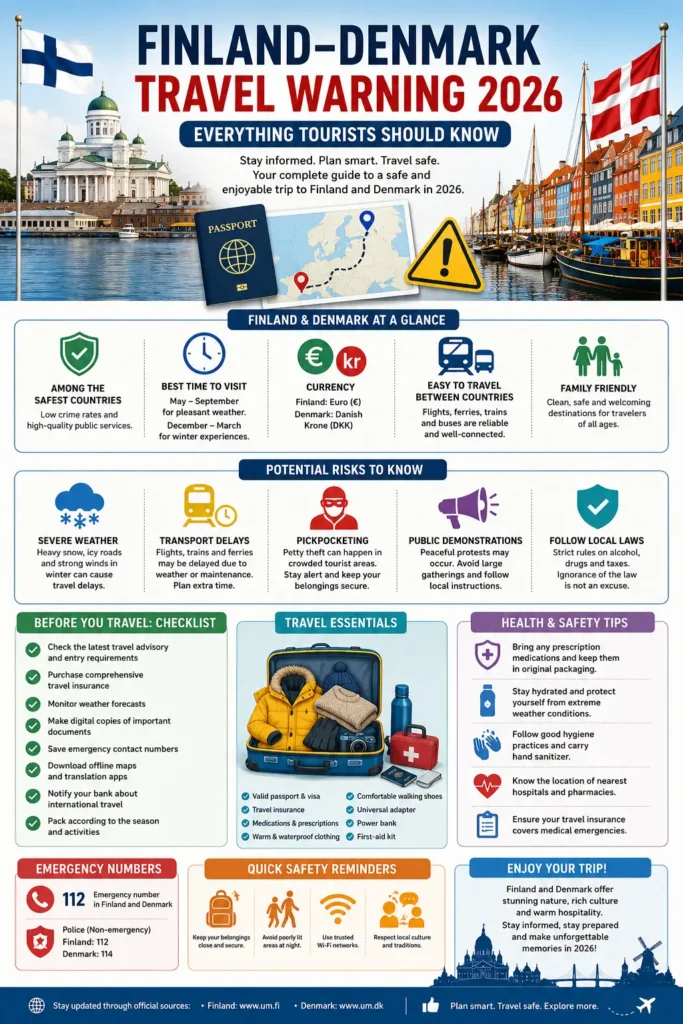
For Finland and Denmark, most travel advice in recent years has focused on staying aware of seasonal weather conditions, respecting local laws, preparing for transportation changes, and following official guidance during public events. Both countries continue to rank among the safest destinations in Europe, but even safe countries require travelers to stay informed.
In simple words, the Finland–Denmark Travel Warning 2026 is less about avoiding these countries and more about traveling responsibly.
Current Travel Situation in Finland and Denmark
One of the biggest misconceptions among travelers is assuming that neighboring countries always have identical travel conditions. Although Finland and Denmark are both Nordic countries, they have different climates, transportation systems, and local regulations.
Finland is known for its long winters, icy roads, and remote northern regions. During winter months, heavy snowfall and freezing temperatures can occasionally affect road travel, train services, and domestic flights. Travelers visiting Lapland should especially monitor weather forecasts before moving between towns.
Denmark, on the other hand, generally experiences milder winters thanks to its coastal location. However, strong winds, heavy rain, and occasional storms may interrupt ferry schedules or outdoor sightseeing activities.
Fortunately, both countries have highly developed infrastructure, efficient emergency services, and reliable public transportation systems that help minimize disruptions whenever unexpected situations arise.
Is It Safe to Travel Between Finland and Denmark in 2026?
The short answer is yes.
For most tourists, traveling between Finland and Denmark remains safe. Millions of visitors travel throughout Scandinavia every year without experiencing major problems.
Nevertheless, responsible travelers understand that safety depends not only on the destination but also on personal preparation.
For example, consider Emma, a traveler from Canada who planned a winter holiday across Helsinki and Copenhagen. Before leaving home, she checked weather forecasts, downloaded offline maps, purchased travel insurance, and kept digital copies of her passport.
During her trip, a snowstorm delayed her connecting flight from Helsinki. Instead of panicking, she already knew her airline’s rebooking process and had travel insurance to cover additional expenses. What could have become a stressful experience turned into only a minor inconvenience.
Her story highlights an important lesson:
Preparation often matters more than the travel warning itself.
Common Risks Tourists Should Know
Although Finland and Denmark remain among Europe’s safest destinations, every traveler should understand the most common challenges they may encounter.
1. Severe Winter Weather
Winter is beautiful across Scandinavia, but it also presents practical challenges.
Heavy snowfall, icy sidewalks, freezing temperatures, and reduced daylight hours require travelers to plan carefully.
Visitors unfamiliar with Nordic winters should:
- Wear insulated waterproof clothing.
- Use shoes with good grip.
- Allow extra travel time.
- Check weather forecasts daily.
- Avoid unnecessary travel during severe storms.
Being prepared makes winter much more enjoyable.
2. Transportation Delays
Flights, trains, ferries, and buses generally operate efficiently in both countries. However, weather conditions, maintenance work, or seasonal demand can occasionally cause delays.
To reduce stress:
- Book flexible tickets whenever possible.
- Keep digital copies of reservations.
- Arrive early at airports and ferry terminals.
- Monitor transport updates before departure.
A little flexibility can save hours of frustration.
3. Pickpocketing in Tourist Areas
Violent crime against tourists is uncommon in Finland and Denmark. However, petty theft can occur in crowded locations.
Popular attractions, train stations, airports, shopping streets, and festivals may attract opportunistic pickpockets.
Simple precautions include:
- Keep valuables in zipped pockets.
- Use anti-theft backpacks.
- Avoid displaying expensive jewelry.
- Never leave luggage unattended.
- Stay aware of your surroundings.
These habits are useful in almost every international destination.
4. Public Demonstrations
Like many democratic countries, Finland and Denmark occasionally host peaceful demonstrations or political gatherings.
Most protests remain orderly, but travelers should avoid large crowds because transportation routes or public spaces may be temporarily affected.
If you encounter a demonstration:
- Stay calm.
- Follow instructions from local authorities.
- Choose an alternate route if necessary.
- Monitor local news for updates.
Entry Requirements for International Tourists
Before booking your trip, confirm that your travel documents meet current entry requirements.
Your preparation checklist should include:
- A valid passport with sufficient remaining validity.
- Any required visa or travel authorization, depending on your nationality.
- Return or onward travel documentation if requested.
- Proof of accommodation when applicable.
- Evidence of sufficient funds if required by immigration authorities.
Because entry requirements can change, always verify the latest information before departure through the official immigration or foreign affairs websites of the countries you plan to visit.
Health and Medical Preparedness
One lesson experienced travelers often share is simple:
“It is better to carry something you never need than to need something you never packed.”
Medical care in both Finland and Denmark is of a high standard, but visitors should still prepare before departure.
Consider bringing:
- Prescription medications in original packaging.
- Copies of prescriptions.
- Basic first-aid supplies.
- Travel insurance covering medical emergencies.
- Emergency contact information.
If you have allergies or chronic medical conditions, carry documentation explaining your condition in English. It can save valuable time during emergencies.
Quick Safety Checklist Before You Travel
Before leaving home, spend a few minutes reviewing this checklist:
- ✔ Check the latest travel advisory.
- ✔ Monitor weather forecasts.
- ✔ Purchase travel insurance.
- ✔ Make digital copies of important documents.
- ✔ Save emergency contact numbers.
- ✔ Download offline maps.
- ✔ Notify your bank about international travel.
- ✔ Pack suitable clothing for the season.
- ✔ Keep emergency cash in a separate location.
- ✔ Learn a few local phrases or download a translation app.
These small preparations can make a significant difference if unexpected situations arise.
By understanding these practical aspects of travel, you’ll be even better prepared to enjoy everything Finland and Denmark have to offer while minimizing unnecessary risks.
Frequently Asked Questions (FAQs)
1. Is it safe to travel between Finland and Denmark in 2026?
Yes, traveling between Finland and Denmark is generally considered safe for tourists in 2026. Both countries are known for their low crime rates, modern infrastructure, and efficient public services. However, travelers should stay updated on official travel advisories, weather conditions, and transportation updates before and during their trip.
2. What does the Finland–Denmark Travel Warning 2026 mean?
The Finland–Denmark Travel Warning 2026 is intended to keep travelers informed about potential risks such as severe weather, transportation disruptions, public demonstrations, or changes to entry requirements. It does not necessarily mean you should avoid visiting these countries but encourages travelers to prepare and stay informed.
3. Do I need a visa to travel between Finland and Denmark?
Visa requirements depend on your nationality. Since both Finland and Denmark are part of the Schengen Area, travelers from many countries can enter without a visa for short stays. Always check the latest visa and entry requirements before your departure to avoid unexpected issues.
4. What are the biggest travel risks in Finland and Denmark?
The most common risks include winter weather conditions, occasional transportation delays, pickpocketing in busy tourist areas, and temporary disruptions caused by public events or demonstrations. These risks are generally manageable with proper planning and awareness.
5. Is travel insurance necessary for visiting Finland and Denmark?
Although travel insurance is not always mandatory, it is strongly recommended. A comprehensive travel insurance policy can cover medical emergencies, trip cancellations, flight delays, lost baggage, and other unexpected travel expenses, giving you greater peace of mind.
6. What should I pack for a trip to Finland and Denmark?
Pack according to the season. In winter, bring insulated clothing, waterproof boots, gloves, a warm hat, and thermal layers. During spring and summer, comfortable walking shoes, light jackets, and rain gear are recommended, as weather conditions can change quickly.
7. Are Finland and Denmark family-friendly travel destinations?
Absolutely. Both countries are excellent destinations for families thanks to their safe cities, reliable public transportation, clean environments, and numerous attractions suitable for children. Families can enjoy museums, parks, zoos, amusement parks, and outdoor activities throughout the year.
8. Can I use the same currency in Finland and Denmark?
No. Finland uses the Euro (€), while Denmark uses the Danish Krone (DKK). Credit and debit cards are widely accepted in both countries, but carrying a small amount of local currency can be useful for small purchases or emergencies.
9. What emergency number should tourists know in Finland and Denmark?
The universal emergency number is 112 in both Finland and Denmark. You can use this number to contact police, ambulance, or fire services if you need immediate assistance during your trip.
10. How can I stay updated on travel advisories during my trip?
Before and during your journey, monitor official government travel advisory websites, local news, weather forecasts, airline notifications, and transportation updates. Enabling travel alerts on your smartphone can also help you receive important information in real time.