Picture this: You wake up to the gentle sound of a distant waterfall, the air is thick with the sweet scent of frangipani flowers, and as you slide open your wooden doors, a vast ocean of green rice paddies unfolds before your eyes. Later that same day, you are sitting on a clifftop with a cold coconut in hand, watching world-class surfers carve through turquoise waves as the sun melts into the Indian Ocean.
This is the magic of the Island of the Gods. However, if you are planning your Bali travel for 2026, you should know that the island has evolved. Following a massive global shift toward more mindful travel, Bali has introduced new guidelines to protect its delicate environment and deep-rooted heritage. The chaotic, over-packed itineraries of the past are making way for “slow travel”—giving you the chance to truly soak in the island’s beauty without the burnout.
Whether you are seeking the vibrant energy of the southern coasts, the spiritual calm of the central highlands, or the untouched corners of the north and east, this guide will walk you through everything you need to know. Let us dive into the ultimate 2026 guide to Bali’s stunning coastlines, deep green forests, and well-kept secrets.
1. Essential Updates: The 2026 Travel Landscape
Before you start packing your favorite swimsuits and hiking boots, there is an important administrative update you must handle. To combat environmental degradation and support local infrastructure, the local government has fully implemented a mandatory tourist tax for all international visitors.
The goal of this initiative is to promote sustainable tourism, ensuring that the funds go directly into waste management, coral reef protection, and the preservation of Balinese culture.
How to Pay the Bali Tourist Tax (Step-by-Step)
The fee is IDR 150,000 (roughly $10 USD or $15 AUD) per person, including children. While you can pay at the airport, the queues can be tedious after a long flight. Here is the smartest way to handle it before you even leave home:
- Visit the Official Website: Go strictly to the Love Bali portal or download the Love Bali app on your smartphone. Beware of unofficial third-party websites that charge extra service fees.
- Enter Your Details: You will need your passport number, full name, email address, and expected date of arrival.
- Make the Payment: Use a credit card (Visa, Mastercard, Amex) to pay the IDR 150,000 fee securely.
- Save Your QR Code: Once the payment is successful, you will receive a QR code via email. Screenshot this code and save it to your phone’s photo gallery or digital wallet. You will scan this at the “Fast-Track” checkpoints when you land at Ngurah Rai International Airport.
Important Note: This levy is entirely separate from your entry visa. You still need to apply for your e-VOA (Electronic Visa on Arrival) via theofficial Indonesian e-Visa websitebefore your trip.
2. The Best Beaches in Bali: Sun, Surf, and Sand
Bali’s coastline is remarkably diverse. The sand changes from powdery white in the south to sparkling volcanic black in the north and east. In 2026, the focus is on finding the right beach for your specific vibe.
Uluwatu: Dramatic Cliffs and Pristine Waters
If you are looking for postcard-perfect views, Uluwatu is the crown jewel of the Bukit Peninsula. The beaches here are tucked beneath massive limestone cliffs, requiring a bit of a hike down steep stairs, but the reward is immense.
Suluban Beach, famously known as Blue Point, requires you to walk through a fascinating limestone cave before emerging into a spectacular cove. For a more relaxed swimming experience, Padang Padang offers softer waves and a bohemian atmosphere. Uluwatu is also home to some of the world’s most iconic beach clubs, where you can watch the sunset to the soundtrack of international DJs.
Canggu: The Bustling Hub
Canggu remains the undisputed capital of digital nomads, surfers, and foodies. While the beaches here (like Echo Beach and Batu Bolong) have darker volcanic sand and rougher surf, the real draw is the lifestyle. The coastline is lined with aesthetic cafes, surf schools, and beachfront bars. It is bustling, loud, and incredibly fun. If you want to socialize, surf, and eat incredible plant-based food, Canggu is your spot.
Amed: The Quiet Coastal Escape
For a completely different pace, head to the island’s eastern coastline. Amed is a sleepy fishing village famous for its dramatic black sand beaches and incredible offshore marine life. The water here is calm and crystal clear, making it a paradise for snorkeling and scuba diving. You can swim right off the shore and explore vibrant coral reefs and even a sunken Japanese shipwreck.
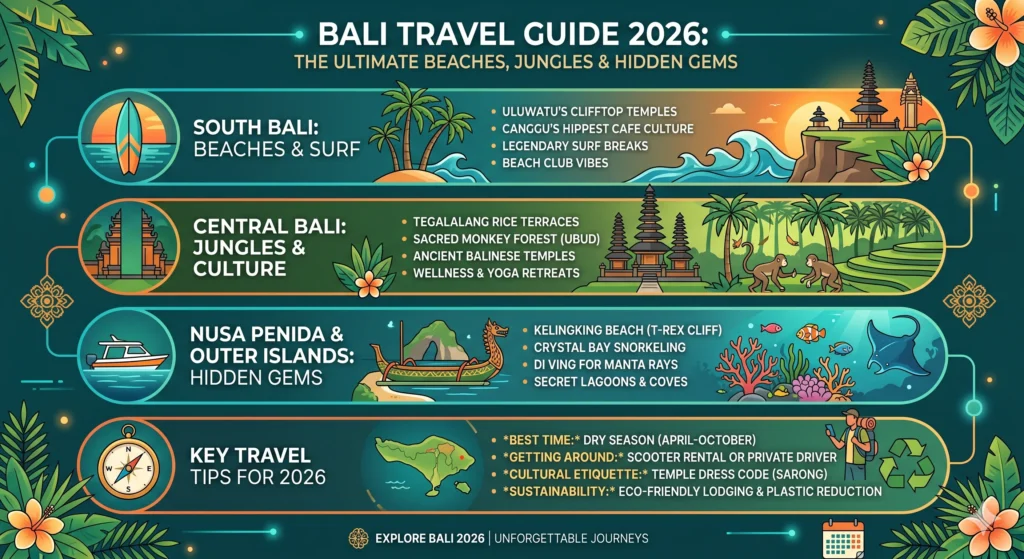
3. The Heart of the Island: Ubud Jungles and Rice Terraces
Moving away from the salt and sand, the center of the island offers a completely different world. The Ubud jungles are the spiritual and cultural epicenter of Bali. This area is defined by deep river gorges, towering banyan trees, and centuries-old stone temples covered in moss.
The Tegalalang and Jatiluwih Rice Terraces
You cannot discuss Bali travel without mentioning the iconic rice terraces. While Tegalalang in Ubud is famous and easily accessible (perfect for an early morning stroll before the crowds arrive), the Jatiluwih Rice Terraces offer a much grander experience. Recognized as a UNESCO World Heritage site, Jatiluwih spans over 600 hectares of rolling hills.
These terraces are maintained using the Subak system—a traditional Balinese cooperative water management system that dates back to the 9th century. Walking through these fields, listening to the gentle flow of water and the rustle of the stalks, is a profoundly peaceful experience.
Wildlife and Wellness
The Ubud jungles are also home to the Sacred Monkey Forest Sanctuary, a fascinating complex of Hindu temples heavily populated by long-tailed macaques. Beyond wildlife, Ubud is the global capital of wellness. The town is packed with world-renowned yoga studios, sound-healing pyramids, and Ayurvedic spas. If you need to hit the reset button on your physical and mental health, spending a few days in the jungle canopy is the best medicine.
Find Your Perfect Balinese Balance
Struggling to decide whether to spend more time by the ocean or in the forest? Use this interactive explorer to weigh the different environments based on your personal travel style.
4. Discovering Bali’s Hidden Gems
Even in 2026, there are still quiet, untouched pockets of the island if you know where to look. Getting off the main tourist trail is the best way to experience authentic Balinese culture and witness nature without the crowds.
Sidemen Valley: The Old Bali
If you want to experience what Ubud was like thirty years ago, head to the Sidemen Valley in East Bali.
Nestled in the shadow of the mighty Mount Agung, Sidemen is a lush, sleepy village where life moves at a delightfully slow pace. There are no major beach clubs or crowded shopping streets here. Instead, you can spend your days trekking through rice fields, visiting local weavers who make traditional Songket textiles, and swimming in secluded river bends. It is one of the most profound hidden gems left on the island.
The Nusa Islands: Beyond the Main Tourist Spots
Just a 45-minute fast boat ride from the mainland lies Nusa Penida and its smaller sister islands, Nusa Lembongan and Nusa Ceningan. While Nusa Penida has gained massive fame for the T-Rex-shaped cliffs of Kelingking Beach, the smart 2026 traveler knows to explore the island’s quieter southern coast.
Alternatively, rent a scooter and cross the iconic yellow suspension bridge to Nusa Ceningan. It is a tiny, walkable island with stunning blue lagoons, cliff-jumping spots, and zero traffic—a rare luxury in modern Bali.
Sekumpul Waterfall: The Northern Giant
Bali has hundreds of waterfalls, but Sekumpul in the northern highlands is arguably the most magnificent. It is actually a cluster of seven massive waterfalls plunging down towering, jungle-clad cliffs. Because it requires a long drive from the southern hubs and a demanding hike into the valley, it filters out the casual tourists. Standing at the base of Sekumpul, feeling the immense power of the water and the spray on your face, is an unforgettable adventure.
5. Crafting Your 2026 Itinerary: A Step-by-Step Guide
Planning a trip can feel overwhelming, especially with the island’s notorious traffic. To make the most of your time, follow this logical, step-by-step framework to build your itinerary.
- Handle the Paperwork Early (1-2 Months Before): Secure your flights, apply for your e-VOA online, and pay the tourist tax via the Love Bali app.
- Start with the Coast (Days 1-4): Upon landing, head south. Choose Uluwatu if you want dramatic cliffs, surfing, and high-end beach clubs. Choose Canggu if you prefer bustling cafes, nightlife, and boutique shopping. Spend your first few days adjusting to the timezone with your toes in the sand.
- Transition to the Culture and Canopy (Days 5-8): Hire a driver and move inland to the Ubud jungles. This is your time for temple visits, early morning ridge walks, spa treatments, and exploring the vast rice terraces. The cooler mountain air provides a nice break from the coastal humidity.
- Escape to a Hidden Gem (Days 9-12): End your trip by stepping off the grid. Take a fast boat to Nusa Penida for rugged island adventures, or head east to Sidemen Valley for absolute tranquility and deep immersion into Balinese culture.
- Buffer Your Departure (Day 13): Traffic from remote areas to the airport can be unpredictable. Spend your final night in a town closer to the airport, like Sanur or Jimbaran, where you can enjoy a calm final sunset seafood dinner on the beach before flying out the next day.
Final Thoughts
Bali in 2026 is a destination maturing into a new era. By leaning into sustainable tourism, paying the new levies, and respecting the local customs, you become a part of the solution that keeps this island magical. Whether you are catching the perfect wave down south, meditating in the misty Ubud jungles, or discovering the quiet beauty of its hidden gems, the Island of the Gods still possesses an undeniable energy that changes everyone who visits. Pack light, travel slow, and let Bali work its magic on you.